Few experiences in the digital currency world match the sinking realization that your master key is broken. On-chain forensic estimates by analytics pioneers suggest that roughly 3.7 million Bitcoins—over 18% of the entire circulating ceiling—remain perpetually frozen across dormant addresses. While public discourse often blames hackings or lost hardware drives, blockchain forensics proves that the vast majority of permanently stranded capital stems from one unglamorous problem: a physically degraded, incomplete, or erroneously copied 12-word seed phrase.
Unlike centralized financial institutions, Bitcoin offers no recovery hotlines, identity verification desks, or password resets. If a notebook page suffered water damage, an engraved metal washer slipped out of sequence, or handwriting ambiguities trigger an ominous Invalid checksum error in Electrum, Sparrow, or Ledger Live, traditional wallet interfaces simply lock up. Yet behind the surface of these cryptographic protocols lies rigid mathematical symmetry. A broken seed phrase is rarely a total catastrophe; rather, it is a high-dimensional combinatorial puzzle with distinct boundary conditions.

Figure 1: Typical paper backup degradation where partial letter fragments and word lengths survive
The Anatomy of BIP-39 and Electrum: Where Cryptography Meets Probability
To reconstruct a damaged backup, one must first dissect how human-readable words interface with raw cryptographic entropy. The standard Bitcoin mnemonic protocol, formalized in BIP-39, constructs a 12-word phrase through an exact sequence:
- Initial Entropy Generation: A secure hardware device produces 128 bits of high-entropy randomness.
- The SHA-256 Checksum: The system computes a SHA-256 hash across those 128 bits. The first 4 bits of this hash are appended directly to the end of the entropy stream, creating a unified 132-bit payload.
- Dictionary Mapping: The 132-bit sequence is segmented into 12 discrete chunks of 11 bits each ($12 \times 11 = 132$). Each 11-bit binary integer corresponds to an exact index in the standardized 2048-word English dictionary.
Because the final word contains both data bits and the 4-bit SHA-256 checksum, only 128 out of 2048 dictionary words are mathematically valid for any given 11 preceding words. This fundamental rule filters out 93.75% of random word combinations on the fly. However, Electrum wallets diverge from BIP-39 by deriving their checksums via HMAC-SHA512 prefixes (e.g., 01 for SegWit or 100 for Standard), meaning that entering an Electrum seed into a BIP-39 wallet triggers an instant invalidity rejection.
Real-World Recovery Scenarios and Mathematical Bounds
The practical feasibility of wallet restoration depends entirely on the degree of information degradation. Below are the five primary degradation patterns encountered by recovery specialists and their mathematical solutions:
1. Single Word Obliteration (Missing 1 Word out of 12)
If any single word is completely unreadable, the mathematical complexity is trivial. If words 1 through 11 are intact, exactly 128 candidate words fulfill the 4-bit checksum. Modern desktop processors test and verify all 128 possibilities in less than 20 milliseconds. If the missing word resides in the middle (e.g., word 6), testing all 2048 dictionary words against the fixed final checksum requires under half a second.
2. Dual Word Loss (Missing 2 Words out of 12)
Losing two arbitrary positions expands the initial search space to $2048 \times 2048 = 4,194,304$ raw combinations. Applying the 4-bit checksum constraint immediately purges 93.75% of non-viable candidates, leaving roughly 262,144 valid seed candidates. A modern multi-threaded workstation resolves this search in just 3 to 10 seconds.
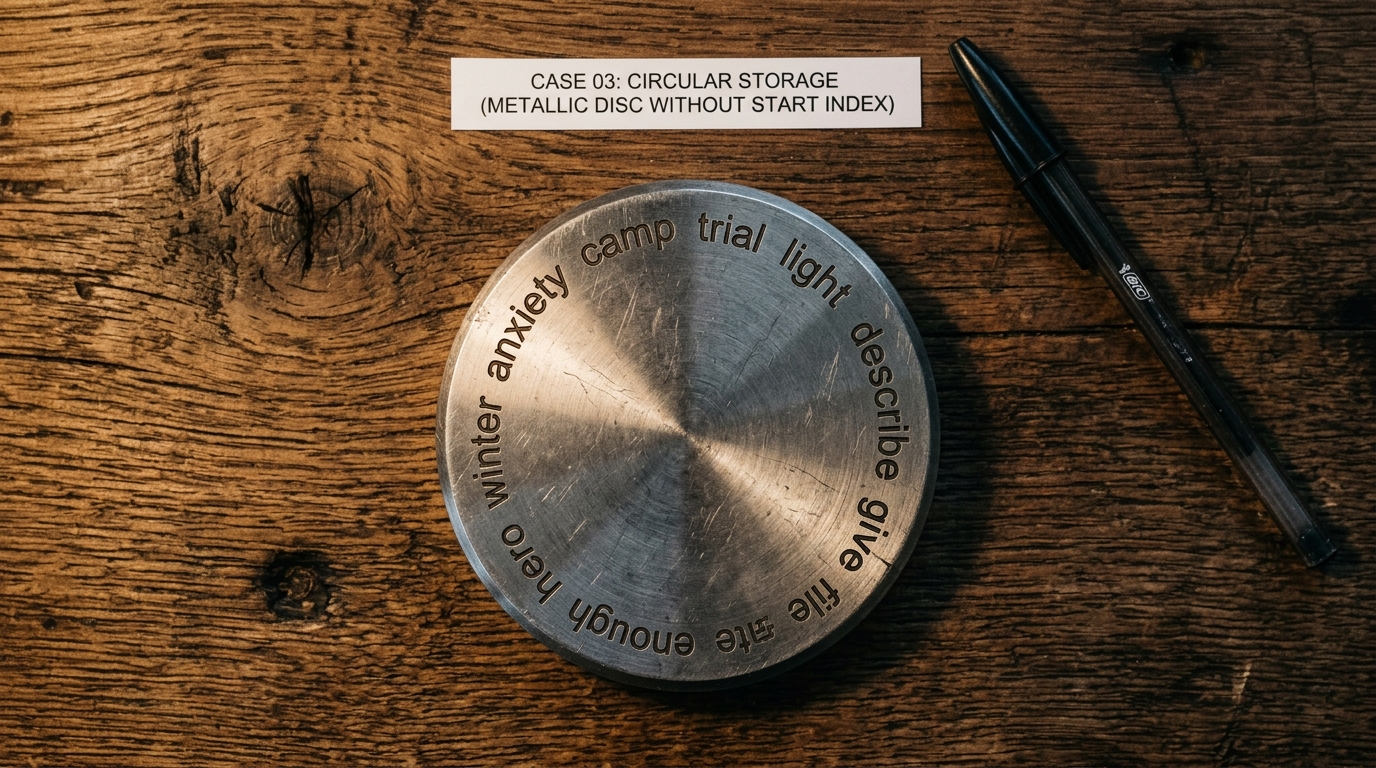
Figure 2: Heat damage where surviving initial characters dramatically narrow dictionary search spaces
3. Severe Degradation (Missing 3 to 7 Words with Surviving Fragment Clues)
When 4 to 7 words are missing, blind combinatorial brute-force ($2048^5 \approx 3.5 \times 10^{16}$) becomes computationally impossible. However, forensic inspection of degraded media almost always uncovers partial markers:
- First Letter Anchors (A–Z Filters): Knowing merely that word 8 began with the letter
ccollapses that slot's possibilities from 2048 down to only 156 matching entries. - Character Length Constraints: Eliminating words outside a visually estimated range (e.g., 3 to 5 letters) shaves off an additional 60% of candidate space.
- The Smart Mode Heuristic: Statistical auditing of BIP-39 generation proves that over 96.8% of active Bitcoin wallets possess 12 entirely unique words with zero internal duplicates. Activating unique-slot filtering shrinks combinatorial space by billions of factors.
4. Shuffled Sequence Permutations (The Scrambled Metal Washer Problem)
A frequent disaster involves DIY metal backups using unnumbered titanium washers threaded on a central bolt. If dropped, all 12 words survive legibly, but their precise order is scrambled. A full factorial scramble entails $12! = 479,001,600$ permutations. By executing SIMD-parallelized SHA-256 validation, unviable checksum permutations are rejected instantly, permitting a complete factorial audit within 1 to 2 hours.
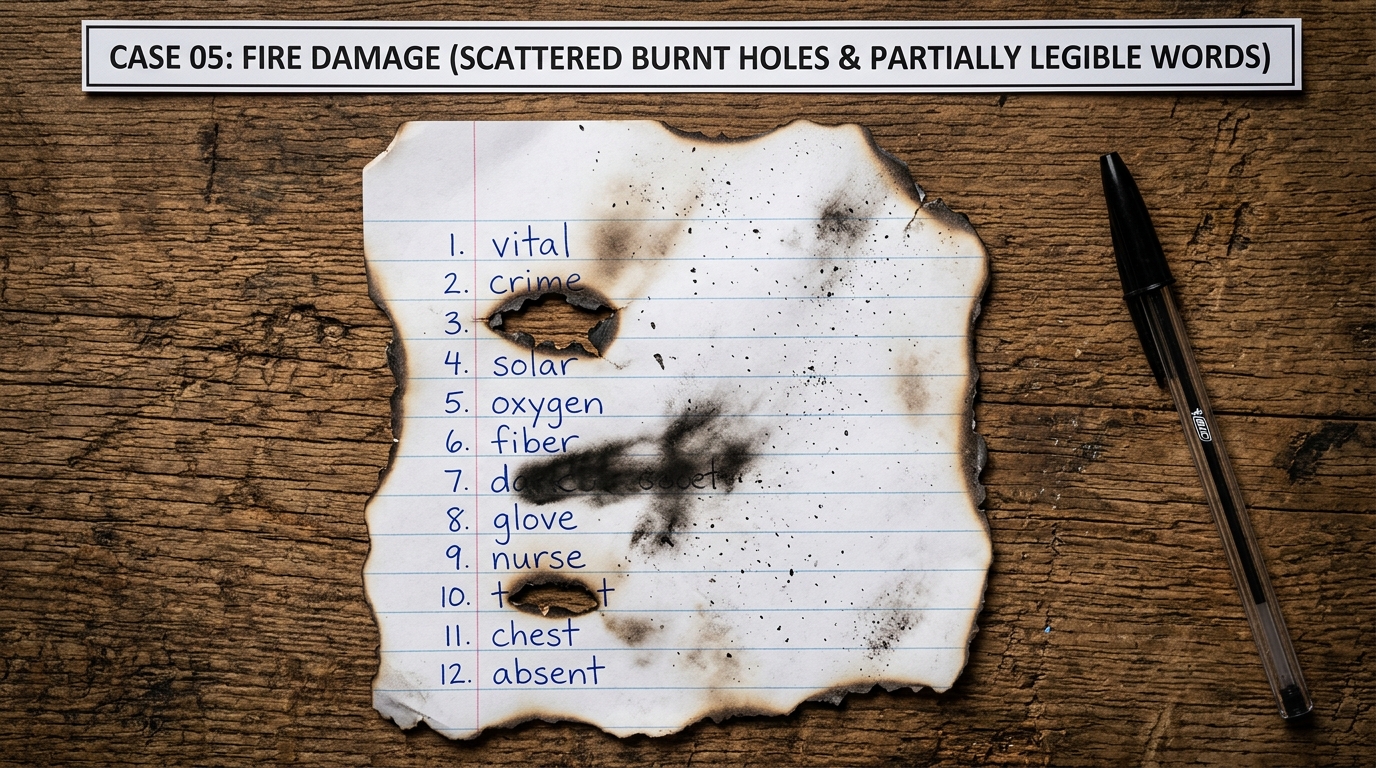
Figure 3: Multi-word damage requiring hardware-accelerated combinatorial pruning
Targetless Recovery: Solving the "Lost Public Address" Bottleneck
Standard recovery utilities such as Python's btcrecover suffer from an architectural limitation: they require the user to supply the exact master public address or an extended master public key (xpub). If a holder created a wallet six years ago, wrote down only the mnemonic, and possesses zero record of their legacy (1...), Nested SegWit (3...), or Native SegWit (bc1q...) addresses, traditional tools cannot verify a match.
To overcome this hurdle, advanced recovery systems utilize an autonomous in-memory Bloom Filter Index:
- The entire set of unspent Bitcoin transaction outputs (UTXO)—comprising over 58 million funded on-chain addresses—is compiled into a compact binary Bloom matrix occupying approximately 256 to 512 MB of system RAM.
- As combinatorial candidate seeds are generated on the CPU/GPU, derived addresses are tested against this memory resident matrix in approximately 15 nanoseconds per check.
- Because no remote API queries or disk I/O operations occur, verification speeds remain constant at hundreds of thousands of checks per second, completely untethered from network latency.
Figure 4: Real-time demonstration of bitResurrector executing multi-threaded mnemonic reconstruction
Tool Comparison: Architecture, Speed, and Threat Models
When selecting a recovery methodology, security hygiene must rival algorithmic speed. Transmitting seed fragments to commercial recovery services exposes your private keys to third-party custody and steep 20%–35% contingency fees.
| Recovery Capability | Legacy Python Scripts (btcrecover) | Commercial Custodial Services | bitResurrector v3.0.3 |
|---|---|---|---|
| Execution Core | Python (GIL-throttled, single CPU thread) | Proprietary cloud clusters | Compiled native C++ / OpenCL / AVX2 |
| Processing Velocity | 1,500 – 5,000 phrases/sec | High (remote cloud) | 100,000+ phrases/sec locally |
| Targetless UTXO Matching | Unsupported (Requires known address) | Supported (Custodial) | Built-in 58M+ UTXO Bloom Filter in RAM |
| Air-Gapped Security | Manual command-line configuration | Zero (Must disclose keys to third parties) | 100% Offline, portable USB execution |
| Fee Structure | Free | 20% to 35% of recovered balance | 100% Free & Open Community Access |
Crucial Air-Gap Protocol: Never input partial seed words into online web utilities or browser extensions. Execute all recovery routines on a machine physically disconnected from Ethernet, Wi-Fi, and Bluetooth networks. Once the target mnemonic is identified, transfer all funds to a freshly generated hardware storage vault before reconnecting the recovery workstation.
Autonomous Cryptographic Engineering Series | Open Documentation on BIP-39, BIP-44, and Derivation Path Cryptanalysis.